

The CQLS Illumina NGS sequencing service operates two instruments: NextSeq2000 and MiSeq. The CQLS offers library prep and QC services prior to sequencing. To help the Illumina HTS user community, we have established an HTS mailing list where users can share information and announcements are posted by the Core Lab. Please contact Mark Dasenko with any questions regarding library prep and sequencing submission. Questions regarding the sequencing data output can be addressed by Justin Elser.
Illumina NextSeq2000
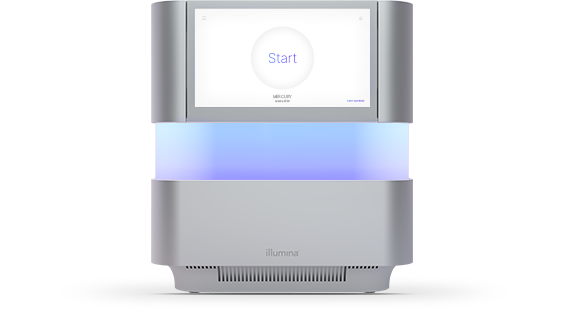
More information about the NextSeq 2000 can be found on the specification sheet. There are four different sizes of flow cells available for the NextSeq 2000 that provide the following output:
P1- 100 million reads/run
P2- 400 million reads/run (300 million reads/run for 300bp PE)
P3- 1.2 billion reads/run
P4- 1.8 billion reads/run
The following read lengths are available:
50bp single end (P3 only)
100bp single end
50bp paired end
100bp paired end
150bp paired end
300bp paired end
Illumina MiSeq

Multiple samples can be run at once by using indices for each sample. 2x300bp reads are supported on the MiSeq (and on the NextSeq 2000, as of 11/15/2022) and takes ~3 days to run. With v.3 kits the MiSeq can produce >25 million reads or 15GB per run. With v.2 kits the MiSeq can produce >15 million reads or 7.5 GB per run with standard flow cells. There is also the option of using micro and nano flow cells which produce up to 4 million and 1 million reads per run (1.2Gb & 500Mb). Actual output can vary depending on cluster density.
Libraries prepped for the NextSeq2000 can be run on the MiSeq and vice versa (with one exception of libraries prepped with the older pre-TruSeq genomic single end prep kits). The Nextera™ XT library prep kit is made for small genomes, plasmids, and amplicons, ideal for the MiSeq. The Core Facilities offers Nextera XT library prep as an optional service. Additionally, for those who wish to sequence amplicons, there are protocols available using a 2-step PCR approach for creating libraries.
Important: Low diversity (at each cycle of sequencing, most bases are the same; base distribution not balanced) libraries can be problematic when run on the MiSeq instrument. Therefore, a control must be spiked into the sample by the Core Facilities prior to sequencing. For highly diverse libraries, it is recommended to spike in PhiX at 1-5%, but for low diversity libraries (amplicons, RAD-seq, etc.) it is recommended to spike in at least 10% and lower the cluster density. Failure to follow these guidelines can result in a failed sequencing run, in which the CQLS Core Facilities cannot be held responsible. It is most important to have high diversity during the first several cycles of sequencing, as this is when the critical calculations for the entire run are made (cluster id, matrix & phasing, & image registration). There are additional options to correct for low diversity. These include increasing the number of different libraries per run, reducing cluster density, shearing long amplicons, and careful library design if using the 2-step PCR approach for amplicon library prep. Diversity can be introduced during primer design.
Library Preparation Service
We offer several kinds of library prep for Illumina sequencing. These include RNA-seq, DNA-seq, 16s amplicon PCR library. Custom library preps are also available. Consult with us to determine the type of prep best for your experiment in addition to the quality and quantity requirements for samples. We accept libraries prepared by you as long as it fits into the parameters necessary for the Illumina sequencer. If custom barcodes are planned determine the requirements for the instrument before library preparations.
Hints For All Preps
Quality: A better quality sample will give a better library. Nucleic acids should have absorbance ratio values A260/A280 of 1.8–2.0. Longer length genomic DNA is better and for some preps necessary. RNA quality should be checked with the bioanalyzer before library preps and is not included in the fee. RINs of 8-10 are best for most preps. If the RIN is less, talk to us about possible preps.
Quantity: We appreciate more DNA or RNA if you have sufficient material for 2X or more, especially if you have determined concentration by a spectrophotometer such as nanodrop rather than a fluorometric method such as Qubit. We will double check the concentration with the Qubit fluorometer before starting. You must supply enough extra DNA or RNA beyond the required amount for the prep. An additional 2-5 mL is recommended. Quantification is included in the library prep fee.
PCR Cycles: We will use a recommended default value for the number of PCR cycles in the protocol’s amplification step. Notify us if you would like to change this number.
Size Determination: After library prep is complete, the size distribution must be checked with the bioanalyzer HS-DNA chip or TapeStation HS DNA tape. This is not included in the prep fee.
Size Selection: Some preps will need additional size selection. We will notify you if that is the case.
Library Quantification: We recommend the library prep concentration to be determined by qPCR before sequencing for many of our preps. This is an extra fee.
Pooling: Library pooling is included in the library prep fees. Let us know how you would like your libraries pooled and in what ratios before we start the prep. Selection of barcodes for the pool is important to plan before library prep is started.
Library Sample Submission
- 260/280 ratio of library should be around 1.8 (NanoDrop).
- Very important: It is the researcher’s responsibility to accurately quantify and determine the size distribution of the final Illumina prepped sample. This will allow us to optimize the number of reads and maximize the quality of the data produced. We recommend using multiple QC techniques. For quantification, qPCR is the most accurate followed by fluorometric (Qubit) measurement, bioanalyzer, and Nanodrop.
- NanoDrop spectrophotometer - Detection limit is 2ng/uL, making it inaccurate for quantifying final diluted product (10nM). The NanoDrop reading will overestimate the library concentration because it detects all DNA (even w/o adapters), RNA, proteins, free nucleotides, and primers too. In addition, salts and organic compounds can affect readings.
- Agilent 2100 Bioanalyzer – The Agilent Bioanalyzer can be used to estimate final product concentration and to check the size distribution of the library. The CQLS Core Facilities offers Bioanalyzer service on high sensitivity DNA chips for this purpose. The detection limit on these chips for DNA sequencing libraries is 100pg/uL.
- Fluorometer (eg. Qubit) - This uses fluorescent dyes specific to dsDNA, RNA, ssDNA, or proteins for detection. More sensitive than NanoDrop so that it can detect concentrations as low as 10pg/uL.
- Real-time/quantitative PCR - This protocol uses primers that match the adapters, so that only templates with both adapters will be measured. The CQLS Core Facilities offers quantification by qPCR using the KAPA Biosystems library quantification kit. See service fees for costs. We will need ~12uL of ~10nM library to perform qPCR quantification. In addition, the CQLS Core Lab houses an Applied Biosystems 7500 Fast Real Time PCR instrument that is available to users after a brief training.
- Molar concentration of library. The following is a sample calculation:
Library concentration = 40ng/µL
Median size fragment = 170bp
Library molecular weight = 170bp × 650g/mol per bp = 110500g/mol
Molar concentration = 40ng/µL / 110500ng/nmol = 0.000362nmol/µL
= 0.362µM
= 362nM
- For the concentration to be run on a flow cell it is recommended to run a range to optimize the number of clusters formed. If the DNA concentration is too low then too few clusters are formed and sequencing throughput is low. If the DNA concentration is too high then the density of clusters is too great and complicates data analysis, often filtering many of the reads out.
- For the NextSeq 2000, we typically load 650-1500pM with 1% PhiX spike-in for high diversity libraries and at least 10% PhiX spike-in for low diversity libraries.
- Please provide us with 30uL (if possible) of 10nM sample in Qiagen buffer EB (Tris-Cl 10mM, pH 8.5) supplemented with 0.1% Tween-20 (optional). We recommend that a final quantification be performed by the Core lab with qPCR. The sample will then be diluted to the final loading concentration with solutions provided in the Illumina sequencing kits.
CQLS Illumina NextSeq 2000 Service Description
The Center for Quantitative Life Sciences (CQLS) offers a service to sequence DNA samples on the Illumina NextSeq 2000 platform. Due to the nature of the technology, the CQLS has established a formal description of the service to ensure the greatest utility to its users. The description below contains information about arranging payment, sample submission and subsequent data analysis.
- Initially, all projects should be discussed with Mark Dasenko. Mark will provide the date for your Illumina run. As detailed below, several things must be in place at least 2 days prior to this date or your spot in the CQLS Illumina job queue will be forfeited. If you have questions about the computational requirements for downstream analysis of your data, please contact Justin Elser.
- Parties from outside Oregon University System (OUS) must establish payment terms prior to submitting biological samples to the CQLS. Payment terms must be in place at least 2 working days prior to the scheduled Illumina run. You will need an account in RELMS to place an order.
- Although the overall design of the project using data from the Illumina sequencers is the responsibility of the submitting parties, CQLS staff can provide specific details related to sample submission and data acquisition. For questions related to biological sample and PhiX Spike-In, contact Mark Dasenko. For questions about data acquisition or the Barcode policy, contact
- At least 2 days prior to the scheduled Illumina run, an order should be placed using RELMS.
- Biological samples should be submitted to Mark Dasenko at the CQLS at least 2 days prior to scheduled Illumina run (see address in item number 12).
- Mark Dasenko will prepare the samples and run them on the Illumina NextSeq 2000 sequencer.
- Primary data from the Illumina sequencers will be transferred to a central repository within the CQLS computational infrastructure. All primary data and data generated by the Illumina data analysis pipeline (see 10) will reside in the central repository for a maximum of 2 weeks from the time of transfer.
- Primary data will be archived to digital tape.
- Primary data will be run through the Illumina data analysis pipeline. Analysis of HTS data is a major consideration. The CQLS does not maintain adequate staff to do any analysis of Illumina data other than what is generated by the Illumina data analysis pipeline. The Illumina data analysis pipeline extracts DNA sequence data from the image files generated by the sequencers as it cycles through the samples. Therefore, the CQLS will deliver all the primary data generated by the NextSeq 2000 and the DNA sequence data generated by the Illumina data analysis pipeline. Please note that sequence reads containing adaptor or non-reference sequences will not currently run through the basic mapping feature of the Illumina pipeline. Mapping will require parsing of reads from adaptor sequence, then mapping of the parsed reads. The CQLS does not currently provide these steps as a service.
- Graphical and Tabular summaries of the data will be available on a website maintained by the CQLS. The URL for the data will be emailed to the submitting parties.
- All primary data and the data generated by the Illumina data analysis pipeline will be available for only 2 weeks on the CQLS file servers. Therefore, researchers will need to copy their data onto a file server they own or a collaborator's file server. External customers have the option of downloading their data via the web or providing an external USB hard drive. This USB hard drive must be supplied by the external customer to the CQLS (see below) at least 2 days before the scheduled Illumina run. Please contact Justin Elser to determine the size of hard drive that is needed to store the flow cell data. The CQLS is not responsible for the hard drive, any data on the hard drive, or shipping costs. Send hard drives to:
Mark Dasenko
Center for Quantitative Life Sciences
Oregon State University
ALS 3012
Corvallis, OR 97331-7303
Checklist for CQLS Illumina service:
All of the items on this checklist must occur at least 2 days prior to the scheduled Illumina run. Failure to do so will result in losing your place in the CQLS Illumina queue.
- Contact Mark Dasenko to schedule Illumina run
- Establish payment terms (non-OSU users only)
- Place order using RELMS
- Submit biological samples to Mark Dasenko
- Send USB hard drive to Mark Dasenko (if necessary)